


Hysteroscopy is a new, minimally invasive gynecological diagnostic and treatment technique. It involves inserting the endoscope through the cervix into the uterine cavity, providing a magnified view of the observed area. This allows for a more direct and accurate observation and understanding of the uterine cavity and cervical canal, enabling diagnostic and treatment decisions.
Hysteroscopy is a novel, minimally invasive gynecological diagnostic and therapeutic technique. It involves inserting the distal tip of the endoscope through the cervix into the uterine cavity. By utilizing a magnifying effect on the area under observation, it enables a more intuitive and precise visualization and assessment of the conditions within the uterine cavity and cervical canal, thereby facilitating diagnosis and treatment.
Principles of Hysteroscopy
The working principle of hysteroscopy involves distending the uterine cavity using a distension medium to ensure full expansion, thereby providing a clear field of view for observation and adequate working space for manipulation. During the procedure, the physician inserts the distal tip of the endoscope into the uterine cavity. Using fiber-optic cables to transmit a "cold light" source into the cavity, the physician can directly visualize and assess physiological and pathological changes within the cervical canal, the internal os, the endometrium, and the tubal ostia. Simultaneously, an endoscopic camera system transmits images from within the uterine cavity to a monitor, allowing the physician to observe the internal environment and perform procedures in real-time.
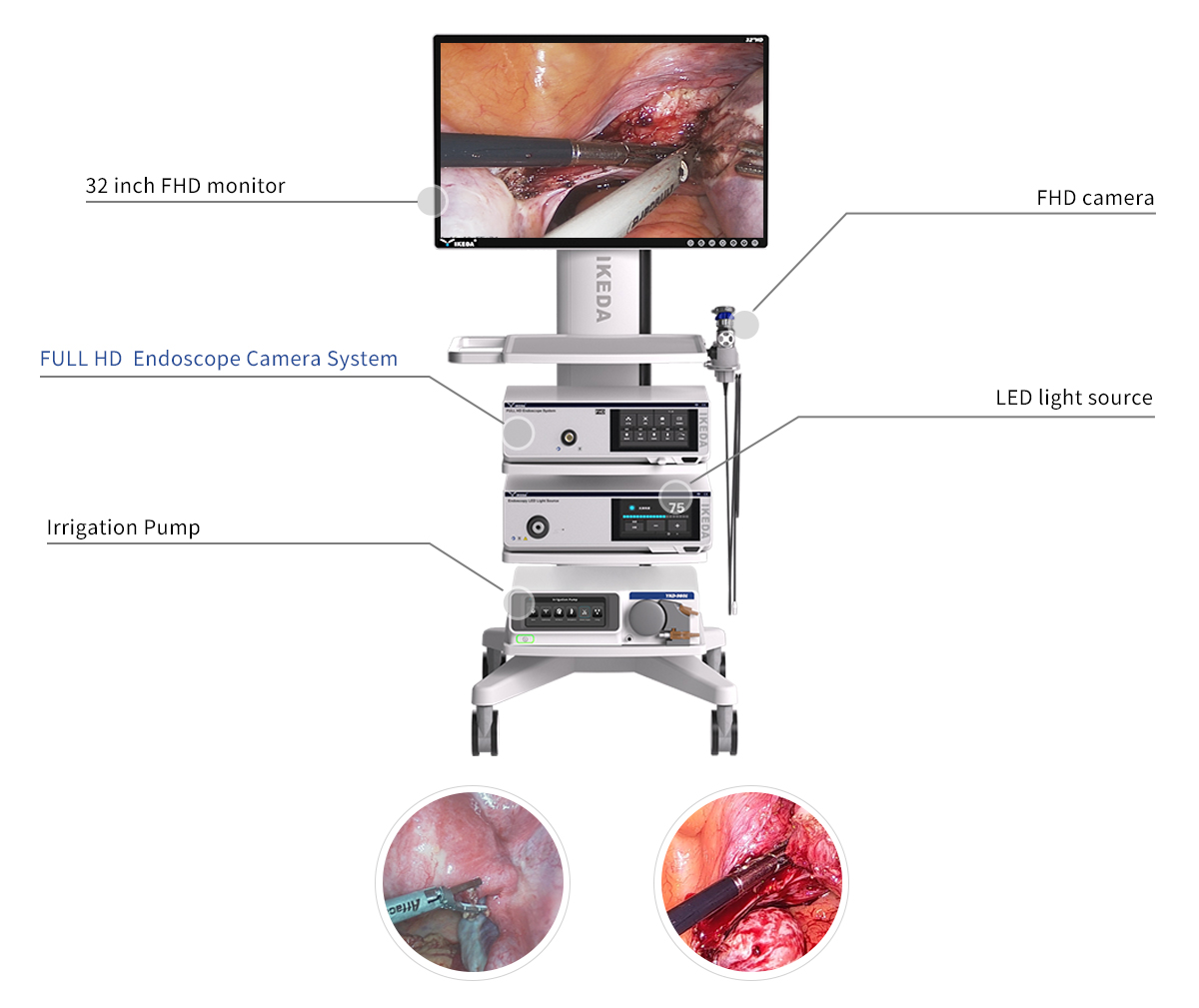
Components of a Hysteroscopy Tower
1. Endoscope Body:The endoscope body constitutes the core component of the hysteroscopy system; it is typically a slender, tubular structure featuring a magnifying lens at its distal tip, enabling clear visualization of minute structures within the uterine cavity.
2. Endoscope Camera System: This system transmits images captured within the uterine cavity to a display monitor, allowing the physician to observe the internal environment and perform procedures in real-time.
3. Light Source System: This system provides sufficient illumination to ensure the interior of the uterine cavity is clearly visible; it typically employs "cold light" technology to prevent thermal injury to the surrounding tissues.
4. Distension and Irrigation System:This system distends the uterine cavity by infusing a distension medium (such as carbon dioxide gas or a 5% glucose solution), while simultaneously serving to cool, irrigate, and lubricate the operative field.
5. Energy System:This system provides the necessary energy support for surgical interventions—such as electrical energy for electrodes and currents—to facilitate procedures involving tissue resection, repair, and other manipulations.
Indications for Hysteroscopy
Hysteroscopy has broad applications in the diagnosis and treatment of gynecological disorders, primarily encompassing the following categories:
1.Abnormal Uterine Bleeding: This includes abnormal bleeding occurring both pre-menopausally and post-menopausally, and it constitutes one of the most common indications for hysteroscopy.
2. Infertility and Recurrent Miscarriage: Used to investigate cervical canal and intrauterine factors, and to evaluate the underlying causes of infertility.
3. Endometrial Pathologies: Such as endometrial polyps, endometriosis, endometrial carcinoma, etc.
4. Intrauterine Adhesions and Malformations: Used to diagnose and lyse intrauterine adhesions, and to assess structural abnormalities within the uterine cavity.
5. IUD Localization: Used to locate and retrieve displaced or lost intrauterine devices (IUDs).
6. Pregnancy-Related Issues: Such as the removal of retained products of conception following early pregnancy.
As an advanced, minimally invasive gynecological diagnostic and therapeutic technique, hysteroscopy has played a pivotal role in the diagnosis and treatment of gynecological disorders. With the continuous advancement of technology, hysteroscopy is poised to play an even greater role in the future, serving as a steadfast guardian of women's health.