


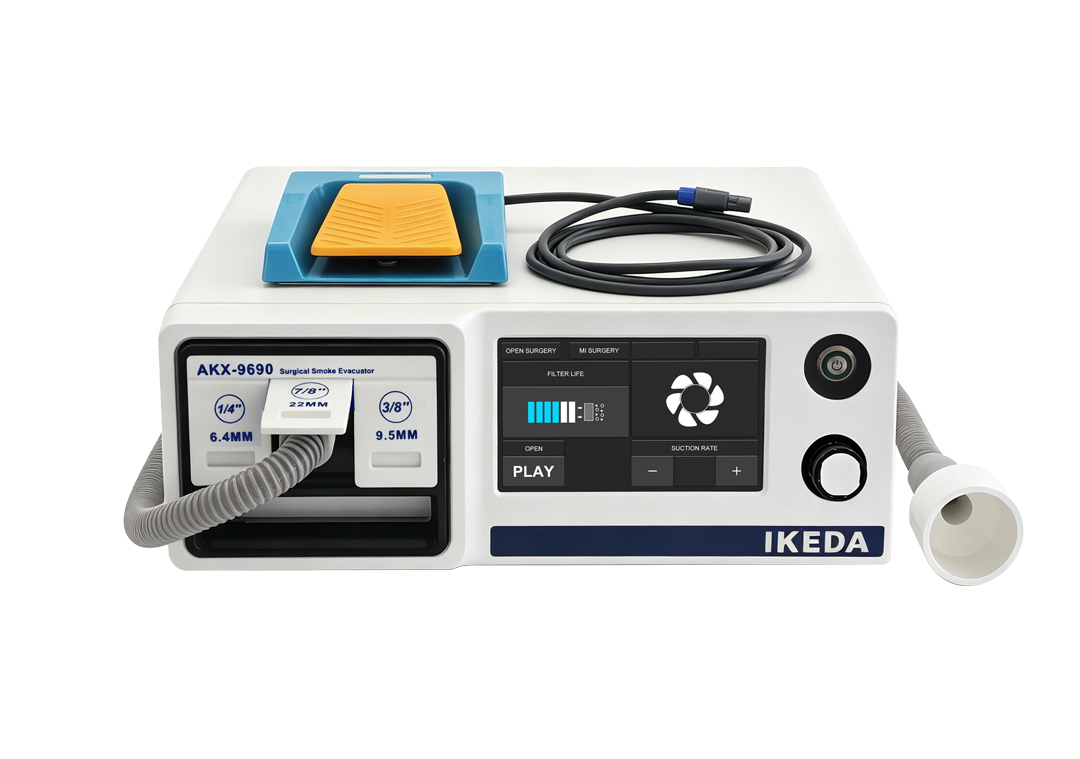
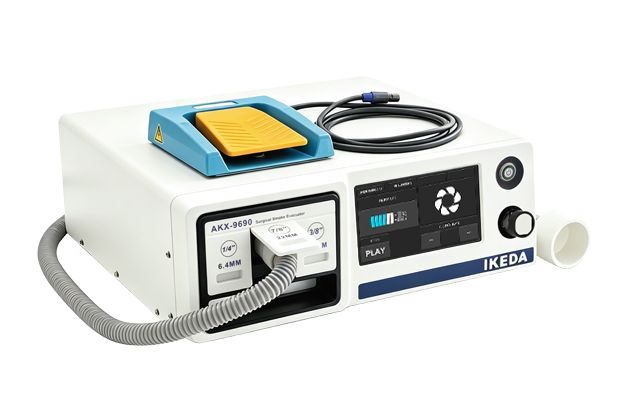
AKX-9690 smoke evacuation system
The IKEDA smoke evacuation system captures and filters surgical smoke to remove odor, particulates, and other byproducts of electrosurgery procedures.
The smoke evacuation system is suitable for open surgery, minimally invasive endoscopic surgery, LEEP cervical treatments and cosmetic laser surgery, etc.
Compact, effective, economical, and quiet smoke evacuation
The IKEDA smoke evacuation system is designed to effectively capture and filter surgical smoke to remove odor, particulates, and other potentially hazardous byproducts of electrosurgery procedures.The system offers optional accessories that enable synchronized integration with electrosurgical generators from other brands with the AKX-9690 smoke evacuation system.
Features
The IKEDA smoke evacuation system consists of multiple components, all working together to capture and filter surgical smoke during procedures.
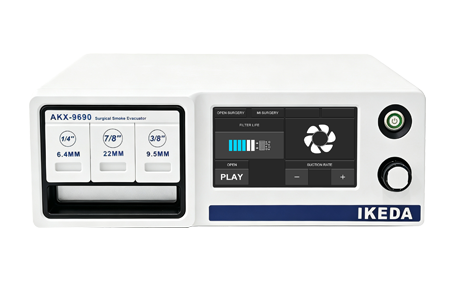
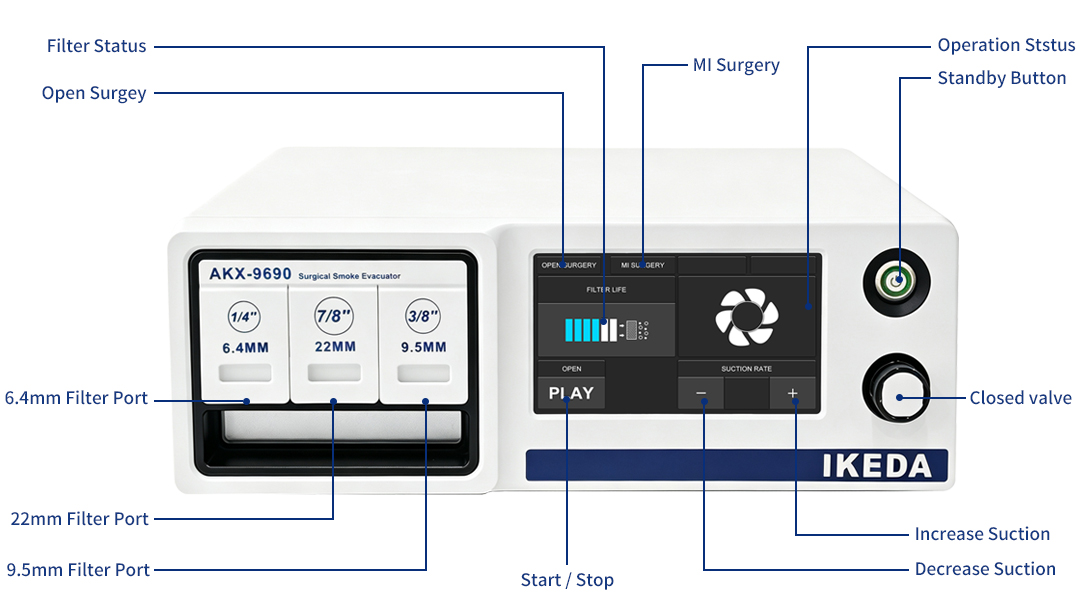
AKX-9690 smoke evacuator
The IKEDA Smoke Evacuation System AKX-9690 is a compact, high-efficiency solution designed to enhance operating room safety by effectively removing hazardous surgical smoke generated during electrosurgical and laser procedures.
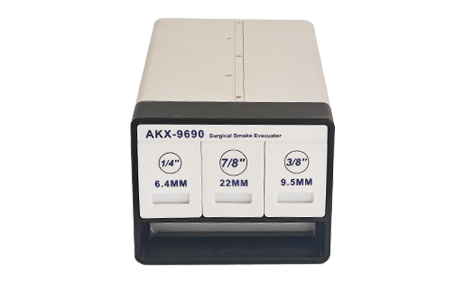
ULPA filter
The ULPA filter is a four-stage smoke evacuation filter.Smart monitoring of filter cartridge lifespan (up to 35 hours)
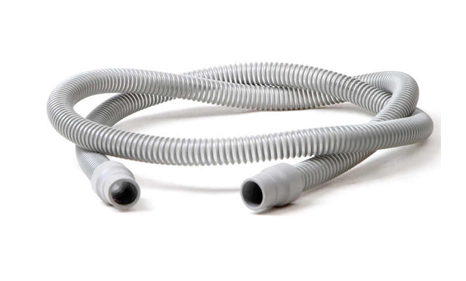
Smoke tubing
Smoke Tubing enables controlled smoke evacuation when connected to the AKX-9690 ULPA filter.
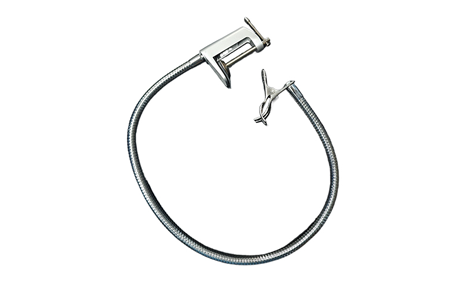
Smoke Evacuator Arm Stand
Designed to hold and support smoke tubing,Reduces kinking, dragging, and accidental dislodgement
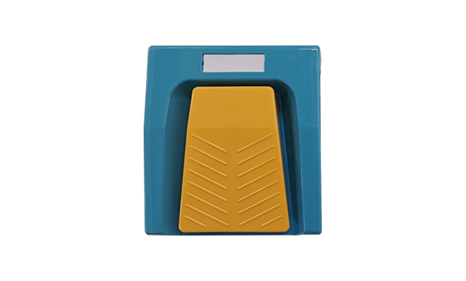
Footswitch
The smoke evacuator footswitch is used to activate the AKX-9690 smoke evacuator.
Technical parameters
| Noise Level | · 43db~73db |
| Maximum Airflow | · 1300 m²/h (varies with different interfaces) |
| High Static Pressure | · 23 kPa |
| Purification Efficiency | · 99.999% (for particles ≥0.12μm) |
| Power Supply Type | · 220V~ 50Hz |
| Circuit Breaker | · 3A 250V |
| Maximum Power Input | · ≤300 VA |
| Display Panel | · 7-inch LCD |
| Dimensions | · 420x145x398mm |
| Smoke Extraction Level | · 10-stage adjustment |
Why Use a Surgical Smoke Evacuation System?
Surgical smoke evacuation systems are primarily designed to aspirate and filter the hazardous smoke generated during surgical procedures. They protect the health of both medical staff and patients while ensuring a clear view of the surgical field. Devices such as electrosurgical units (ESUs), ultrasonic scalpel systems, and lasers vaporize tissue proteins and fats during cutting or coagulation, producing significant amounts of smoke that contains viruses, harmful chemicals, and fine particulate matter.
Protecting Health and Preventing Occupational Exposure
Surgical smoke contains viable viruses (such as HPV and HIV), hazardous chemicals (e.g., carbon monoxide, formaldehyde, and benzene), and mutagenic substances. Long-term inhalation can lead to headaches, nausea, respiratory irritation, and even potential carcinogenic risks. Standard surgical masks are ineffective at blocking these microscopic particles; a dedicated smoke evacuation system provides reliable protection.
Maintaining a Clear Surgical Field and Enhancing Efficiency
Smoke can obstruct the surgeon's view, interfere with anatomical localization, and compromise procedural precision. Continuous smoke evacuation ensures a clear field of vision, allowing for smoother operations and, indirectly, shorter surgical durations.
High-Efficiency Filtration and Air Purification
Modern systems utilize multi-stage filtration—typically employing HEPA or ULPA filters—which achieve a filtration efficiency of over 99.99% for particles ranging from 0.1 to 0.3 microns. These systems effectively remove particulate matter, odors, and harmful gases from the smoke, allowing the purified air to be safely recirculated within the operating room.
Versatile Applications and Flexible Integration
These systems are suitable for a wide range of procedures, including open surgery, laparoscopic/endoscopic surgery, gynecological LEEP (Loop Electrosurgical Excision Procedure), laser-based aesthetic procedures, and minimally invasive urological surgeries. They offer convenient operation through manual activation, footswitch control, or automatic synchronization with electrosurgical devices.