


I. Product Overview
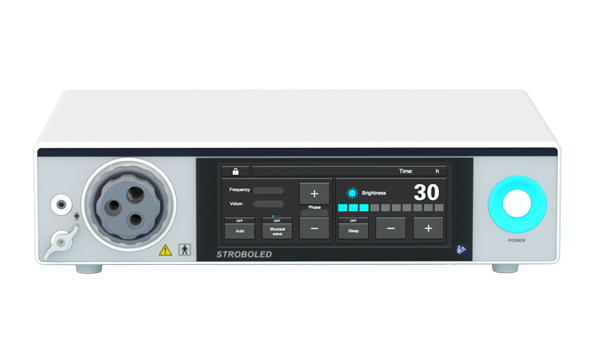
The medical endoscope light source is a core accessory device for endoscopic diagnostic and therapeutic systems. Leveraging advanced optical thin-film technology and infrared filtering principles, it precisely separates the infrared heat energy generated by the light source from the visible light, fundamentally eliminating the risk of thermal burns associated with traditional lighting. The device delivers a stable output of high-brightness, high-fidelity visible light without excess thermal radiation, effectively preventing burns to patient tissues or mucous membranes during procedures.
Featuring a streamlined structure, the device comprises core modules such as the light source unit and a high-efficiency heat dissipation system. It offers stable operation and exceptional compatibility, supporting a wide range of medical endoscopes—including laparoscopic, hysteroscopic, arthroscopic, ENT, cystoscopic, and gastrointestinal endoscopes. Widely used in clinical minimally invasive surgeries and endoscopic examinations, it is a critical component for precise and safe minimally invasive diagnosis and treatment.
II. Product Classification and Performance Comparison
Based on the type of light source, medical endoscopic cold light sources are categorized into three types: halogen, xenon, and LED. These three generations of products differ significantly in performance and cater to varying clinical needs; currently, LED cold light sources represent the mainstream choice in the market.
1. Halogen Cold Light Source
As the first generation of lighting equipment in the early stages of endoscopic development, halogen cold light sources feature low technical barriers and low costs but suffer from significant performance limitations. They generate substantial heat with poor dissipation, leading to rapid equipment wear during prolonged use. Additionally, the light source has a short lifespan and suffers from rapid luminous efficacy decay. The output light has a low color temperature and a yellowish hue, resulting in poor tissue color rendering that can easily impair a physician's visual judgment; consequently, these have been largely phased out of the clinical market.
2. Xenon Cold Light Source
The light output from xenon cold light sources closely approximates natural daylight, offering excellent color rendering and high imaging clarity. It accurately reproduces the true colors of internal body tissues, meeting the visual requirements for precision diagnosis and treatment. Compared to halogen light sources, their service life is improved, though overall longevity remains limited—typically around 500 hours. High replacement frequency for consumables and high long-term operating costs mean they are mostly used in routine, basic clinical settings.
3. LED Cold Light Source
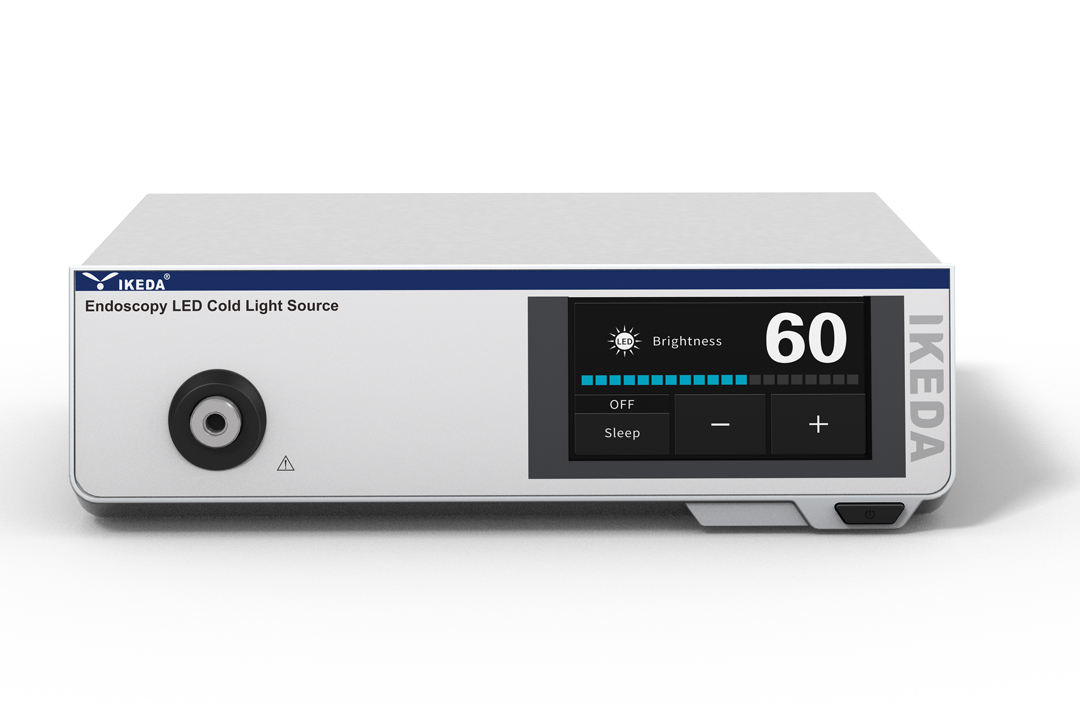
LED cold light sources currently offer the best overall clinical performance among specialized endoscopic lighting systems, becoming the industry's mainstream choice due to several key advantages. Their compact, lightweight design suits various clinical scenarios; they feature high luminous efficiency and minimal heat generation, completely eliminating the risk of thermal injury. Additionally, the light source offers excellent monochromaticity and a pure spectrum free from stray light, ensuring uniform and stable image quality.
Regarding core specifications, LED cold light sources boast a lifespan of up to 50,000 hours—far exceeding traditional sources—which significantly reduces maintenance and consumable replacement costs. They cover a wide color temperature range (3000K–7000K) to meet the dimming needs of different clinical settings. With a Color Rendering Index (CRI) of ≥90, they faithfully reproduce the true colors of human tissue, providing high-quality illumination for precise diagnosis and intricate surgery.
III. Core Clinical Value
Endoscope light sources are integral to the entire process of endoscopic examinations and minimally invasive surgeries. Leveraging advantages such as high brightness, constant temperature, high color rendering, and adjustable output, they resolve critical issues—such as dim internal visibility, color distortion, and thermal injury—thereby comprehensively enhancing the precision and safety of clinical diagnosis and treatment.
1. Facilitating precise endoscopic examinations and reducing misdiagnosis or missed diagnosis rates
During routine internal examinations—such as gastroscopy, colonoscopy, cystoscopy, and nasopharyngoscopy—LED cold light sources deliver stable, bright, and uniform illumination free from dark spots or flickering. This clearly reveals minute lesions and tissue conditions within the body's cavities. The system supports flexible adjustments to brightness and lighting angles, allowing for optimal illumination schemes tailored to specific examination sites and cavity depths. This helps physicians accurately identify tiny lesions and distinguish between normal tissue and abnormal areas, effectively improving diagnostic accuracy and providing reliable visual evidence for early disease screening and condition assessment. 2. Ensuring precision in minimally invasive surgery and enhancing procedural safety
Minimally invasive endoscopic surgery demands exceptional clarity within the surgical field, as precise dissection, cutting, and suturing rely heavily on high-quality illumination. The cold light source—characterized by a lack of thermal radiation—maintains constant-temperature lighting throughout the procedure; this prevents thermal irritation to the patient's sensitive mucosa and delicate tissues, thereby reducing the risk of intraoperative complications. Furthermore, continuous, stable, and high-intensity illumination fully illuminates the surgical field and eliminates visual blind spots, enabling surgeons to clearly monitor procedural details and execute precise maneuvers with accuracy. This significantly enhances the feasibility and safety of minimally invasive surgery, facilitating efficient and successful procedures.