


The medical endoscopic cold light source is an indispensable component of minimally invasive endoscopic surgery, serving as the primary illumination source for the endoscope as well as providing auxiliary medical lighting. Characterized by high brightness, exceptional stability, and a long service life, it provides physicians with a clear and true-to-life field of view, thereby rendering the diagnostic and therapeutic processes more precise and safe.
The Fundamental Functions of Endoscopic Cold Light Sources
The primary function of an endoscopic cold light source is to generate "cold light." It serves as the dedicated light source component for various endoscopes that utilize fiber-optic light guides, providing the necessary illumination for the observation and examination of internal body cavities.
1. Provides High-Brightness Illumination:Endoscopic cold light sources deliver high-intensity illumination, ensuring that physicians maintain a clear and bright field of view throughout endoscopic procedures. This is critical for the detection of lesions and the diagnosis of diseases.
2. Reduces the Risk of Thermal Injury:Compared to traditional "hot" light sources, endoscopic cold light sources significantly minimize heat generation, thereby reducing the risk of thermal injury to the patient's tissues. This enables physicians to perform endoscopic examinations and surgeries with greater safety.
3. Ensures Excellent Light Uniformity: Endoscopic cold light sources exhibit exceptional light uniformity, ensuring an even distribution of light across the entire illuminated area. This prevents shadows and reflections from interfering with the visualization of lesions, allowing physicians to observe the intricate details of pathological sites with greater accuracy.
4. Enhances Diagnostic Accuracy:A clear field of view facilitates more accurate observation of lesions, enabling physicians to formulate precise diagnoses. This holds significant importance for the development of appropriate treatment plans and the improvement of therapeutic outcomes.
5. Reduces Operational Costs: Driven by advancements in LED technology, high-performance LED-based cold light sources are gradually replacing traditional cold light sources. LED cold light sources boast a longer lifespan and superior stability, thereby reducing the frequency of bulb replacements and lowering operational costs. Furthermore, the high brightness and stability inherent in LED cold light sources minimize the workload associated with maintenance and component replacement.
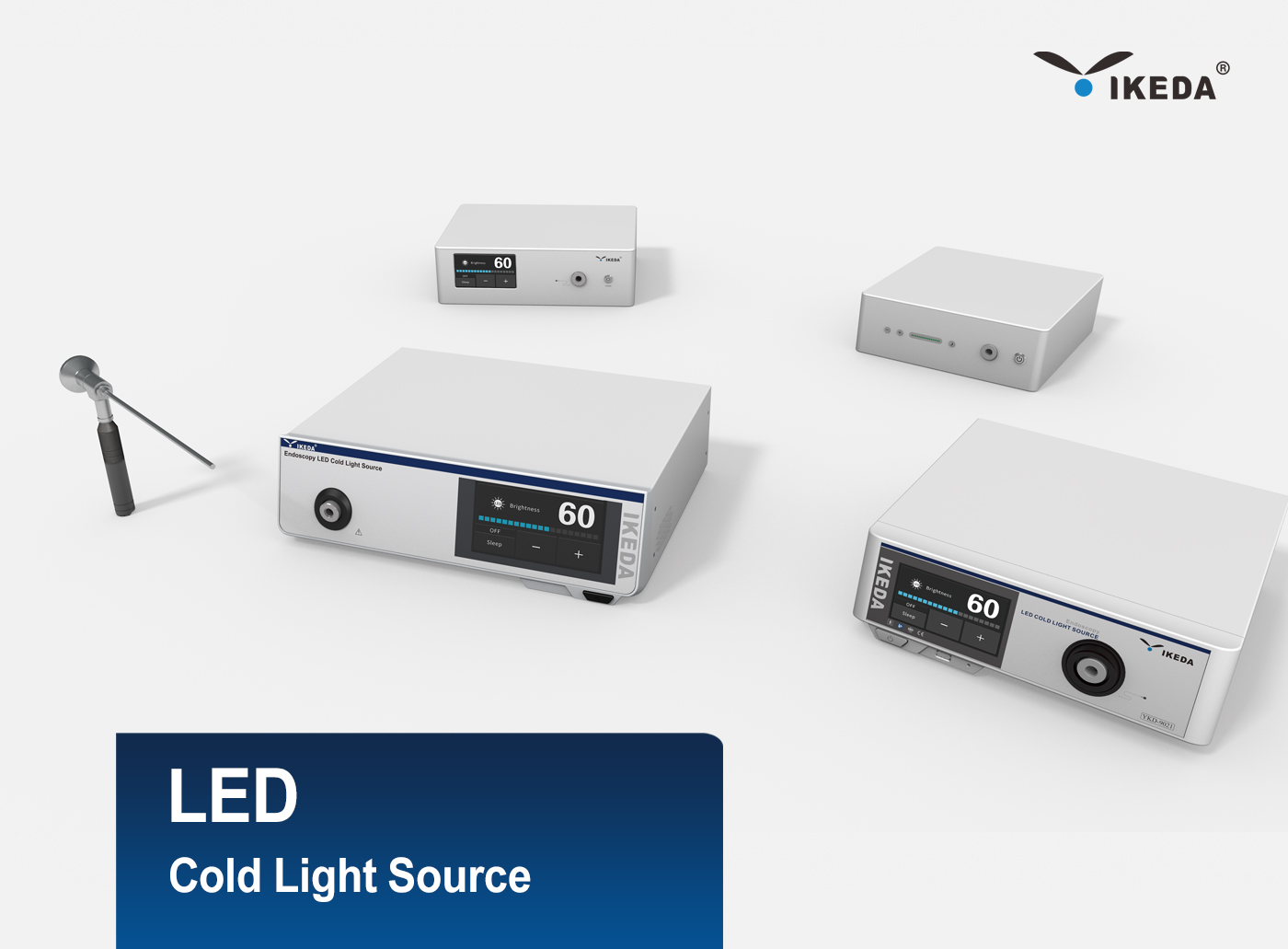
Components of an Endoscopic Cold Light Source:
1. Light Source Unit: The light source unit is the core component of the endoscopic cold light source, responsible for providing a high-brightness, stable light source.
2. Light Guide Bundle: The light guide bundle is the component that transmits the light generated by the light source unit to the endoscope; it typically consists of optical fibers.
3. Control Panel: The control panel is used to adjust the brightness and other parameters of the light source to meet the physician's requirements.
Selection of Endoscopic Cold Light Sources:
Medical lighting is categorized based on the type of light source employed. Traditional lighting fixtures typically utilize halogen or tungsten-halogen bulbs, whereas modern medical lighting relies on LEDs. While traditional endoscopes historically used tungsten-halogen or xenon lamps, the evolving demands of the medical industry have led to the gradual replacement of these older technologies by LED lighting. The LED light source is often referred to as a "long-life lamp"—a light that, in essence, never goes out. Encapsulated in epoxy resin and containing no loose internal components, it is free from the drawbacks associated with filament-based lighting—such as susceptibility to burnout, thermal deposition, and light decay. Consequently, it boasts a service life ranging from 60,000 to 100,000 hours—more than ten times that of traditional light sources. Furthermore, characterized by its eco-friendliness, high brightness, exceptional longevity, and high energy conversion efficiency, the LED light source holds immense potential for application in various fields, particularly in medical diagnostic endoscopy.
Endoscopic cold light sources are indispensable instruments in minimally invasive surgery. For more information regarding endoscopic cold light sources, please feel free to contact IKEDA.