


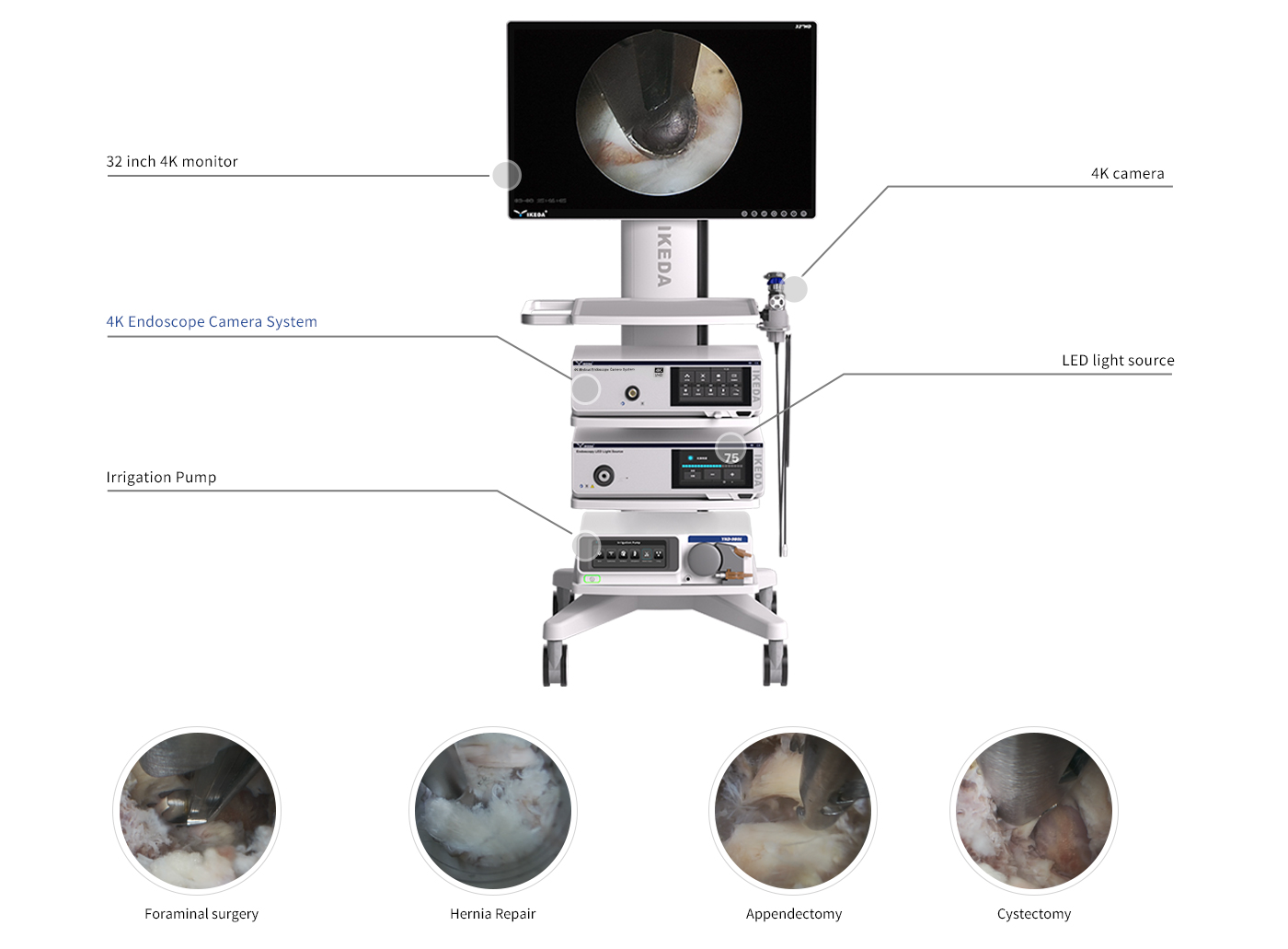
An arthroscopy tower is a medical device used for minimally invasive intra-articular examination and surgery. It primarily consists of an arthroscope, an endoscopic camera system, a light source system, a monitor, a motorized shaver system, an irrigation system, and various surgical instruments.
The components of an arthroscopy tower include:
I. The Arthroscope
The arthroscope is a slender optical endoscope, typically only a few millimeters in diameter, fitted with a miniature lens at its tip. It is inserted into the joint cavity through a small incision. It transmits images of the joint's interior via fiber optics to the camera system, allowing the physician to clearly visualize the condition of structures such as the articular cartilage, menisci, ligaments, and synovial membrane on a monitor. The introduction of the arthroscope serves as the foundation for minimally invasive surgery, eliminating the need for the large incisions associated with traditional open surgery and thereby reducing tissue trauma and postoperative recovery time.
II. The Endoscopic Camera System
The endoscopic camera system is responsible for receiving and processing the optical signals transmitted by the arthroscope, converting them into high-definition electronic signals for display on the monitor. Modern arthroscopy systems frequently utilize HD or 4K camera technology to provide a magnified, crystal-clear surgical field.
III. The Light Source System
The light source system typically employs a "cold light" source to provide ample, stable illumination within the joint cavity via fiber optics. This ensures that the surgical field remains bright and free of shadows, serving as a critical element in guaranteeing the precision of surgical maneuvers.
IV. The Shaver System
The shaver system acts as a primary operative tool during surgery; it consists of a main console and a variety of interchangeable shaver blades and burrs. Operating at high rotational speeds, it can precisely excise diseased synovial tissue, debride damaged cartilage or menisci, and remove loose bodies from within the joint. The system features various operating modes and rotational speeds, allowing the physician to select the appropriate settings based on surgical requirements to achieve the selective resection of pathological tissue while maximally preserving healthy tissue.
V. The Irrigation System
During surgery, the irrigation system continuously infuses sterile saline solution into the joint cavity to achieve two primary objectives. First, it distends the joint cavity, creating sufficient working space for the manipulation of the arthroscope and surgical instruments. Second, it maintains a clear surgical field by using the flow of fluid to flush away tissue debris and blood generated during the procedure. Stable irrigation pressure and flow rates are essential for maintaining a clear visual field and ensuring surgical safety. V. Specialized Surgical Instruments
In addition to powered tools, arthroscopic surgery requires a range of specialized manual instruments—such as probes, basket forceps, grasping forceps, suture devices, and radiofrequency ablation electrodes. These instruments are exquisitely designed to access the joint through small incisions, enabling the execution of complex repair and reconstruction procedures.
Applications of Arthroscopic Tower:
The application of arthroscopy tower has significantly advanced the fields of sports medicine and orthopedics, primarily facilitating diagnostic examinations and surgical interventions involving the knee, shoulder, and hip joints. In terms of diagnosis, the system allows for the direct visualization of the morphology and structural integrity of articular cartilage, the synovium, ligaments, and menisci, thereby pinpointing the specific causes of joint pain, swelling, locking, or restricted range of motion. Therapeutically, it is frequently employed for procedures such as meniscal trimming or repair, anterior cruciate ligament (ACL) reconstruction, removal of intra-articular loose bodies, synovial debridement, repair of articular cartilage defects, and rotator cuff repair. It is applicable to a wide spectrum of joint pathologies, including sports-related injuries, degenerative conditions, inflammatory diseases, and the adjunctive treatment of certain intra-articular fractures.