


Spinal endoscopy is a minimally invasive surgical technique that allows for the direct visualization and treatment of spinal pathologies through an endoscopic channel. It is primarily used to treat conditions such as lumbar disc herniation, spinal stenosis, and nerve root compression. Its key advantages—minimal trauma, rapid recovery, and limited damage to healthy tissue—have established it as an important treatment modality in the field of spinal surgery.
Technical Principles and Procedure
Spinal endoscopic surgery utilizes an endoscopic system with a diameter of approximately 7–8 mm, which is introduced into the spinal canal or intervertebral foramen through a tiny skin incision (typically 0.5–1 cm). The endoscope is equipped with a high-definition camera and a light source, allowing the internal structures of the spine to be magnified and displayed on a screen. Through the working channel of the endoscope, surgeons use specialized micro-instruments (such as forceps or radiofrequency probes) to remove disc tissue compressing nerves, release adhesions, or widen a narrowed spinal canal.
The procedure is often performed under local anesthesia; the patient remains conscious throughout, enabling real-time feedback on neurological function, which helps reduce procedural risks. Depending on the location of the pathology, the approach may be transforaminal (lateral) or interlaminar (posterior); the surgeon selects the optimal route based on diagnostic imaging.
What equipment is typically included in a spinal endoscopic surgical system?
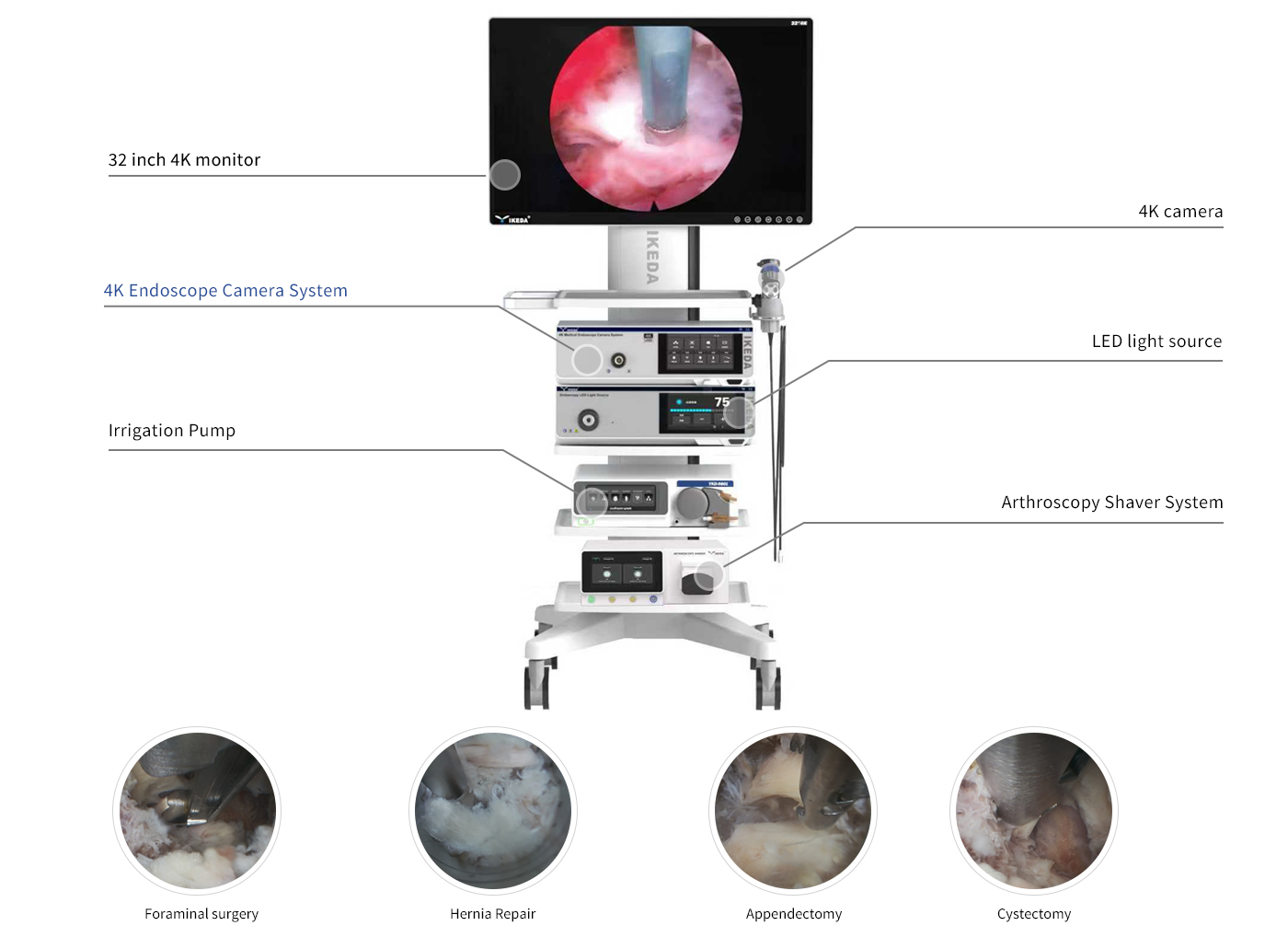
spinal endoscopic surgical system includes endoscope imaging system, Shaver System, Irrigation Pump, Spinal endoscope and surgical instruments.
1. The endosocopic imaging system includes: the endoscopic camera unit, Endoscopic Light Source, Endoscope Light guide, endoscopic camera, and medical monitor. It is the core of the endoscopic system, responsible for illuminating, acquiring, processing, transmitting, and displaying endoscopic images.
2. Spinal endoscope: Spinal endoscopes come in diameters of 6.3mm, 7.3mm, with viewing angles of 30°.
3. Shaver System: It is equipped with brushless high-speed handpiece and foot pedal control, matched with various drills, grinding heads and protective sheaths.
3. Surgical Instruments: There are many types of instruments, commonly including nucleus pulposus rongeurs, grasping forceps, bone-biting rongeurs, laminectomy rongeurs, pituitary rongeurs (basket forceps), nerve retractors, etc.. The choice depends on the surgical needs and the surgeon's habits.
4. Endoscopy Irrigation Pump and Suction System: This is a crucial system for maintaining a clear surgical field.
The above is a brief introduction to the basic components of spinal endoscopic surgical system. For more information, please contact us!